



Chicano Park
San Diego California
Opened April 22, 1970
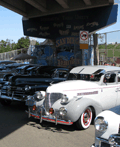
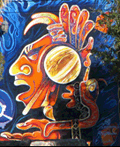
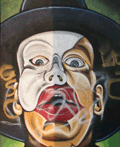
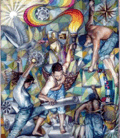
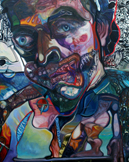
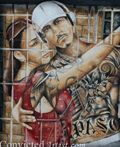
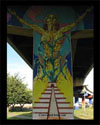
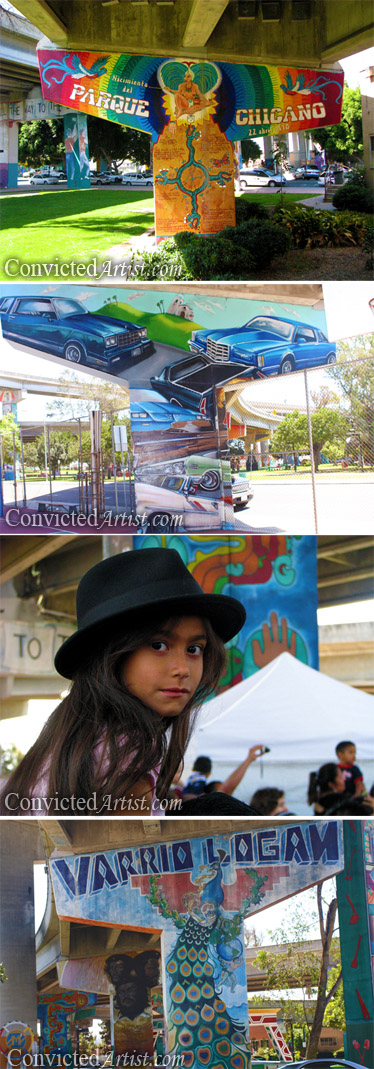
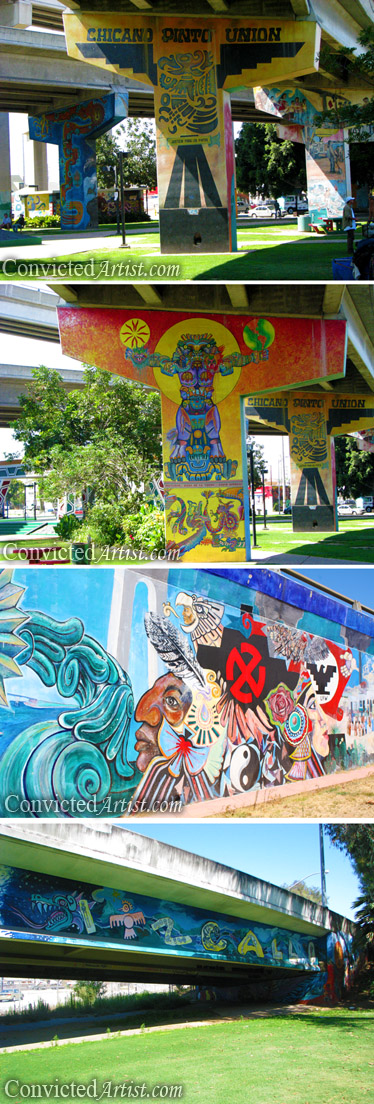
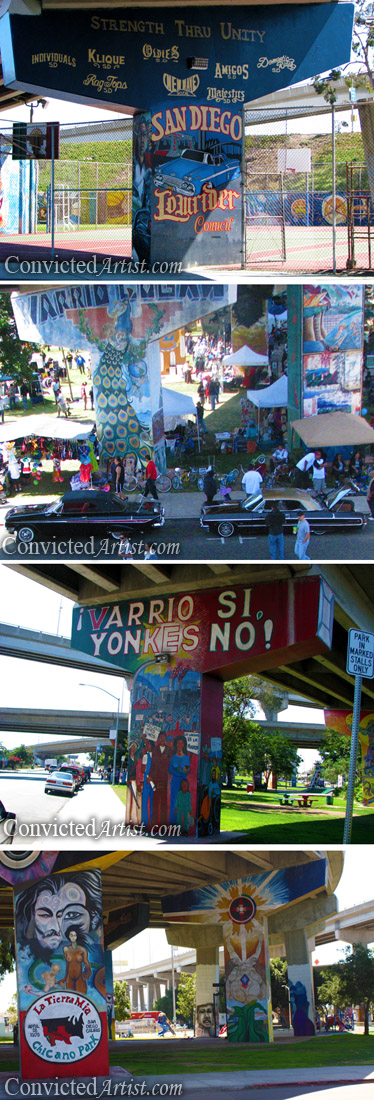
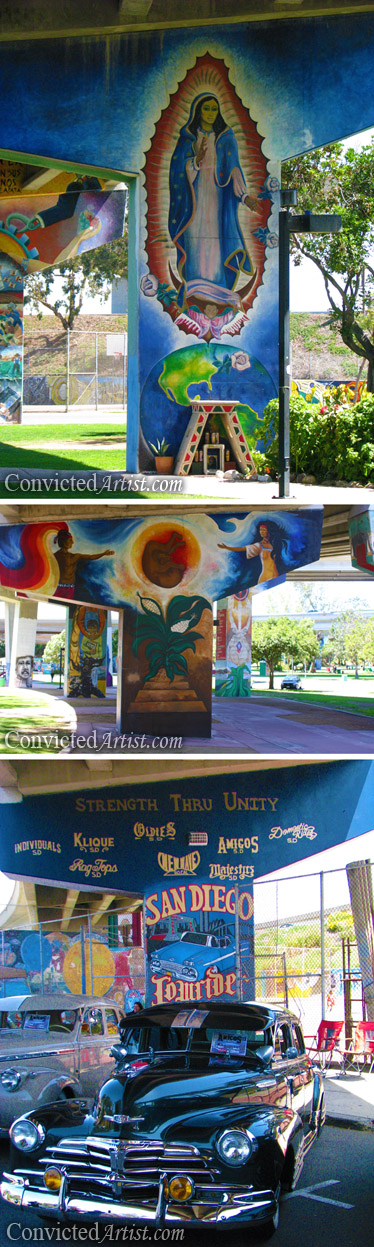
Barrio Logan Heights aka Chicano Park is located in south east San Diego. The mural down park is referred to by many as “el ombligo”, or “the center of the world”.
This park has a deep history and has come close to being torn down by the city several times. The cities politicians once referred the park as “The Tumor” and fought hard to have this unique park leveled with bull dozers.
Fortunately Logan Heights residence fought back harder and on April 22, 1970 just as bull dozers were about to pulverize the park, local residence formed a human chain around the entire park to protect it. Their efforts worked and the city withdrew its plot to destroy on of San Diego’s most prized possessions.
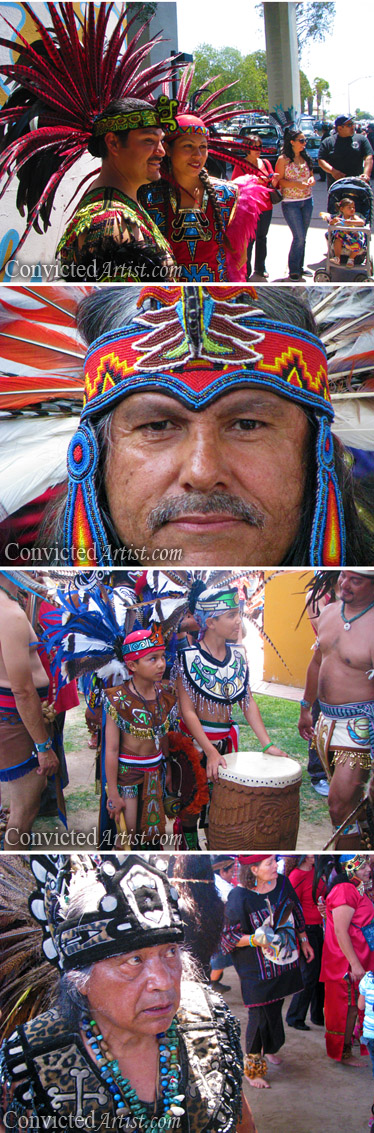
Tourists from all over the world come to San Diego specifically to photograph Chicano Park.
Social Art Barrioism
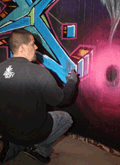
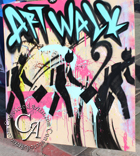
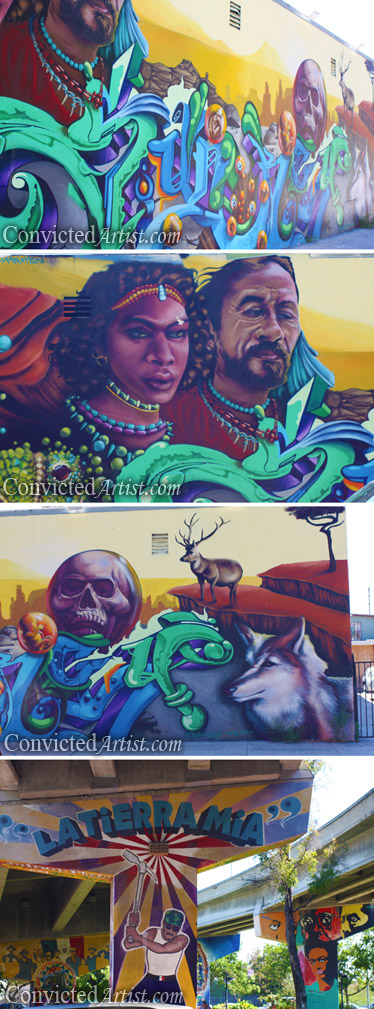
Murals in barrios across the United States are good examples of the power of social art and an important part of society’s cultural heritage.
Even though murals have been around since man kind was created, the Latino community has remained most active in the mural painting renaissance that came as a result of the civil rights struggles of the past.
These murals are an important form of social and political expression. Today there are well over one hundred thousand public murals throughout the nation.
Public murals can be a good way of gauging the concerns of any community. For example if a certain ethnic group is experiencing discriminated, best believe people will find a way of publicizing their concerns through murals and art.
America’s muralists are from a variety of cultural backgrounds, and are by no means only Mexican American.
Today we are finding murals created by other ethnic groups, such as Asian, African American and even Anglos.
Even businesses and the government have sponsored murals as advertisements or as part of city beautification and cultural outreach programs, not only in the Hispanic community but in an increasing number of urban areas throughout the United States.
Quotes
“Website photography is the mural painting of modern times.”
"La palabra Chicano"
By. C.A.
The word Chicano is probably one of the most controversial words in the Hispanic community.
I’ve unintentionally offended my fellow Mexican Americans many times over by referring to them by this word. But then again I've met a lot of Mexican Americans who actually prefer to be called a Chicano. I for one think it’s a pretty cool word so I don’t mind at all when people refer me as being Chicano.
Here is what I’ve learned about the word Chicano as I’ve traveled both Mexico and other parts of the United States. I’ll start off with Texas.
Texas is a pretty diverse state, and Hispanics there view the word differently, depending in what part of this huge state you live in.
I’ve observed that in San Antonio, Dallas and Houston, Hispanics prefer to be called Tejanos or Mexicanos. They are easily offended by the word Chicano.
Now in El Paso Texas it’s actually okay to use the word Chicano since Hispanics in El Paso are similar to the Chicanos of Southern California.
Now in California Chicano is a pretty cool and popular word so you can’t go wrong by using this word. In Mexico it’s alright too and native Mexicans will refer any Mexican American as a Chicano or “pocho Americano”.
The word Chicano actually originated in Mexico several hundred years ago. According to one explanation, the pre-Columbian tribes in Mexico called themselves Meshicas, and the Spaniards, employing the letter x (which at that time represented a sh and ch sound), spelled it Mexicas. The Indians later referred to themselves as Meshicanos and even as Shicanos, thus giving birth to the term Chicano.
So why get offended over a word our indiginous ansestors created?
Chicano Park
San Diego California
Opened April 22, 1970

Barrio Logan Heights aka Chicano Park is located in south east San Diego. The mural down park is referred to by many as “el ombligo”, or “the center of the world”.
This park has a deep history and has come close to being torn down by the city several times. The cities politicians once referred the park as “The Tumor” and fought hard to have this unique park leveled with bull dozers.
Fortunately Logan Heights residence fought back harder and on April 22, 1970 just as bull dozers were about to pulverize the park, local residence formed a human chain around the entire park to protect it. Their efforts worked and the city withdrew its plot to destroy on of San Diego’s most prized possessions.
Tourists from all over the world come to San Diego specifically to photograph Chicano Park.
Social Art Barrioism
Murals in barrios across the United States are good examples of the power of social art and an important part of society’s cultural heritage.
Even though murals have been around since man kind was created, the Latino community has remained most active in the mural painting renaissance that came as a result of the civil rights struggles of the past.
These murals are an important form of social and political expression. Today there are well over one hundred thousand public murals throughout the nation.
Public murals can be a good way of gauging the concerns of any community. For example if a certain ethnic group is experiencing discriminated, best believe people will find a way of publicizing their concerns through murals and art.
America’s muralists are from a variety of cultural backgrounds, and are by no means only Mexican American.
Today we are finding murals created by other ethnic groups, such as Asian, African American and even Anglos.
Even businesses and the government have sponsored murals as advertisements or as part of city beautification and cultural outreach programs, not only in the Hispanic community but in an increasing number of urban areas throughout the United States.
Quotes
“Website photography is the mural painting of modern times.”
"La Palabra Chicano"
By. C.A.
The word Chicano is probably one of the most controversial words in the Hispanic community.
I’ve unintentionally offended my fellow Mexican Americans many times over by referring to them by this word. But then again I've met a lot of Mexican Americans who actually prefer to be called a Chicano. I for one think it’s a pretty cool word so I don’t mind at all when people refer me as being Chicano.
Here is what I’ve learned about the word Chicano as I’ve traveled both Mexico and other parts of the United States. I’ll start off with Texas.
Texas is a pretty diverse state, and Hispanics there view the word differently, depending in what part of this huge state you live in.
I’ve observed that in San Antonio, Dallas and Houston, Hispanics prefer to be called Tejanos or Mexicanos. They are easily offended by the word Chicano.
Now in El Paso Texas it’s actually okay to use the word Chicano since Hispanics in El Paso are similar to the Chicanos of Southern California.
Now in California Chicano is a pretty cool and popular word so you can’t go wrong by using this word. In Mexico it’s alright too and native Mexicans will refer any Mexican American as a Chicano or “pocho Americano”.
The word Chicano actually originated in Mexico several hundred years ago. According to one explanation, the pre-Columbian tribes in Mexico called themselves Meshicas, and the Spaniards, employing the letter x (which at that time represented a sh and ch sound), spelled it Mexicas. The Indians later referred to themselves as Meshicanos and even as Shicanos, thus giving birth to the term Chicano.
So why get offended over a word our indiginous ansestors created?
Chicano Park
San Diego California
Opened April 22, 1970

Barrio Logan Heights aka Chicano Park is located in south east San Diego. The mural down park is referred to by many as “el ombligo”, or “the center of the world”.
This park has a deep history and has come close to being torn down by the city several times. The cities politicians once referred the park as “The Tumor” and fought hard to have this unique park leveled with bull dozers.
Fortunately Logan Heights residence fought back harder and on April 22, 1970 just as bull dozers were about to pulverize the park, local residence formed a human chain around the entire park to protect it. Their efforts worked and the city withdrew its plot to destroy on of San Diego’s most prized possessions.
Tourists from all over the world come to San Diego specifically to photograph Chicano Park.
Social Art Barrioism
Murals in barrios across the United States are good examples of the power of social art and an important part of society’s cultural heritage.
Even though murals have been around since man kind was created, the Latino community has remained most active in the mural painting renaissance that came as a result of the civil rights struggles of the past.
These murals are an important form of social and political expression. Today there are well over one hundred thousand public murals throughout the nation.
Public murals can be a good way of gauging the concerns of any community. For example if a certain ethnic group is experiencing discriminated, best believe people will find a way of publicizing their concerns through murals and art.
America’s muralists are from a variety of cultural backgrounds, and are by no means only Mexican American.
Today we are finding murals created by other ethnic groups, such as Asian, African American and even Anglos.
Even businesses and the government have sponsored murals as advertisements or as part of city beautification and cultural outreach programs, not only in the Hispanic community but in an increasing number of urban areas throughout the United States.
Quotes
“Website photography is the mural painting of modern times.”


![]()